
Are you struggling to make ends meet, wondering if there’s a financial lifeline available for your family? For many low-income families, accessing basic necessities can be a daily challenge.
Financial assistance programs can be a crucial support, helping to bridge the gap between financial constraints and achieving stability.
Government initiatives are designed to provide support and resources to those in need, offering a pathway to a more stable financial future.
Key Takeaways
Table of Contents
- Government programs offer financial assistance to low-income families.
- Various loan options are available to support different needs.
- Eligibility criteria vary by program, so it’s essential to review each one.
- These programs can help with basic necessities and long-term financial stability.
- Application processes are designed to be accessible and straightforward.
Understanding Government Loans for Low Income Families
Understanding the options available for government loans can be a game-changer for low-income families. Government-backed financial assistance is designed to provide support to those who need it most, helping them navigate financial challenges and achieve stability.
What Qualifies as Low Income in the United States
The definition of low income varies based on factors such as family size, location, and income level. The U.S. Department of Housing and Urban Development (HUD) uses a set of guidelines to determine eligibility for various assistance programs. Generally, low-income families are those whose income falls below a certain percentage of the area’s median income.
Benefits of Government-Backed Financial Assistance
Government-backed financial assistance offers numerous benefits, including low-interest rates and favorable repayment terms. These programs are designed to be more accessible and manageable for low-income families, providing them with the financial support they need to overcome challenges.
Differences Between Loans, Grants, and Subsidies
It’s essential to understand the differences between loans, grants, and subsidies. Loans must be repaid, usually with interest, while grants are funds that do not need to be repaid. Subsidies, on the other hand, involve government funding to support specific programs or services, making them more affordable for low-income families.
By understanding these distinctions and the eligibility criteria, low-income families can make informed decisions about the types of assistance they can access.
Types of Housing Assistance Programs
Government initiatives provide a range of housing assistance programs tailored to support low-income households in securing affordable housing. These programs are designed to help individuals and families access safe and stable housing, thereby improving their overall quality of life.
FHA Loans for First-Time Homebuyers
The Federal Housing Administration (FHA) offers mortgage insurance programs that enable first-time homebuyers to purchase homes with lower down payments and more lenient credit score requirements. FHA loans are particularly beneficial for low-income families who may not have the resources for a significant down payment.
USDA Rural Development Loans
The United States Department of Agriculture (USDA) provides Rural Development Loans, which offer zero-down-payment mortgage options to eligible borrowers in rural areas. These loans are ideal for low-income individuals and families looking to purchase homes in rural regions.

Section 8 Housing Choice Voucher Program
The Section 8 Housing Choice Voucher Program is a federal program that assists low-income families, the elderly, and the disabled in affording decent, safe, and sanitary housing. Participants in the program receive vouchers that can be used to rent housing from private landlords.
Eligibility Requirements for Housing Programs
Eligibility for housing assistance programs typically depends on factors such as income level, family size, and citizenship status. Applicants must also meet specific program requirements, which can vary depending on the type of assistance.
| Program | Eligibility Criteria | Benefits |
|---|---|---|
| FHA Loans | Credit score, income, debt-to-income ratio | Lower down payments, lenient credit scores |
| USDA Rural Development Loans | Location in rural area, income, credit score | Zero-down-payment mortgages |
| Section 8 Housing Choice Voucher | Income level, family size, citizenship status | Rent assistance vouchers |
Understanding the eligibility requirements and benefits of these housing assistance programs can help low-income families make informed decisions about their housing options.
Education and Career Development Loans
Low-income families can now benefit from various government-backed education and career development loan programs designed to foster economic mobility. These initiatives are crucial in supporting individuals who aspire to enhance their career prospects through further education and training.
Federal Pell Grants and Subsidized Student Loans
Federal Pell Grants are a type of financial aid that does not need to be repaid. They are awarded to undergraduate students who demonstrate financial need. Subsidized student loans are another form of aid where the interest is paid by the government while the student is in school, making them more manageable for low-income families.
The table below outlines the key differences between Federal Pell Grants and subsidized student loans:
| Program | Repayment Requirement | Interest Payment |
|---|---|---|
| Federal Pell Grants | No | N/A |
| Subsidized Student Loans | Yes | Government pays during school |
Workforce Development Programs
Workforce development programs are designed to equip individuals with the skills needed to secure better-paying jobs. These programs often include vocational training, job placement services, and career counseling. According to a recent study, “Investing in workforce development programs can yield significant returns, both for individuals and the broader economy” (Source: National Association of Workforce Development Professionals).
“The right training and education can be a game-changer for individuals looking to advance their careers. It’s about providing the support they need to succeed.”
Vocational Training Assistance
Vocational training assistance programs offer specialized training in specific trades or technical fields. These programs are designed to be shorter than traditional college degrees, making them a more accessible option for those looking to quickly enter the workforce.
By leveraging these education and career development loan programs, low-income families can access the resources they need to improve their socio-economic standing. It’s a step towards creating a more equitable society where everyone has the opportunity to succeed.
Emergency and Personal Government Loans for Low Income Families
Financial struggles can be overwhelming for low-income families, yet there are government-backed solutions available. These programs are designed to provide immediate relief and support during times of crisis.
Temporary Assistance for Needy Families (TANF)
TANF is a federal assistance program that provides financial help to low-income families with children. The program aims to help families become self-sufficient and provide for their children’s needs.
Key benefits of TANF include:
- Cash assistance to meet basic needs
- Support for childcare costs
- Job preparation and employment services
Low Income Home Energy Assistance Program (LIHEAP)
LIHEAP helps low-income households with their energy bills, ensuring they have access to heating and cooling. This program is crucial during extreme weather conditions.
“LIHEAP is a vital resource for families struggling to pay their energy bills, helping them stay safe and healthy in their homes.”
Emergency Food and Shelter Program
This program provides funding to local organizations that offer emergency food and shelter to those in need. It’s a critical resource for individuals facing homelessness or food insecurity.
| Program | Purpose | Eligibility |
|---|---|---|
| TANF | Financial assistance for families | Low-income families with children |
| LIHEAP | Assistance with energy bills | Low-income households |
| Emergency Food and Shelter | Emergency food and shelter | Individuals in need |

These government programs offer a safety net for low-income families facing various challenges. By providing financial assistance, they help families achieve stability and improve their overall well-being.
Small Business and Entrepreneurship Support
The journey to entrepreneurship is made easier for low-income families through various government grants and loan programs designed to foster business growth. These initiatives are crucial for individuals looking to start or expand their businesses, providing them with the necessary financial assistance and resources.
Several programs are available to support low-income entrepreneurs. SBA Microloans and Community Advantage Loans are designed to provide small amounts of capital to businesses that may not qualify for traditional loans. The SBA Microloan program offers loans up to $50,000, while the Community Advantage Loan program provides loans up to $250,000, supporting businesses in underserved communities.
SBA Microloans and Community Advantage Loans
The SBA Microloan program is particularly beneficial for new businesses or those looking to expand their operations. These loans can be used for a variety of purposes, including working capital, inventory, and equipment purchases. The Community Advantage Loan program, on the other hand, is geared towards businesses in low-income areas, offering favorable terms to help them succeed.
Economic Development Administration (EDA) Programs
The Economic Development Administration (EDA) provides grants and resources to support business development in economically distressed areas. EDA programs focus on creating jobs and promoting economic growth through investments in infrastructure, innovation, and entrepreneurship.
Minority Business Development Agency Resources
The Minority Business Development Agency (MBDA) offers a range of resources for minority entrepreneurs, including business consulting, access to capital, and contracting opportunities. The MBDA’s initiatives are designed to help minority-owned businesses compete and grow in the marketplace.
By leveraging these government programs, low-income individuals and minority entrepreneurs can access the support they need to turn their business ideas into successful ventures. It’s essential for potential applicants to explore these options and understand the eligibility criteria and application processes.
Step-by-Step Application Process
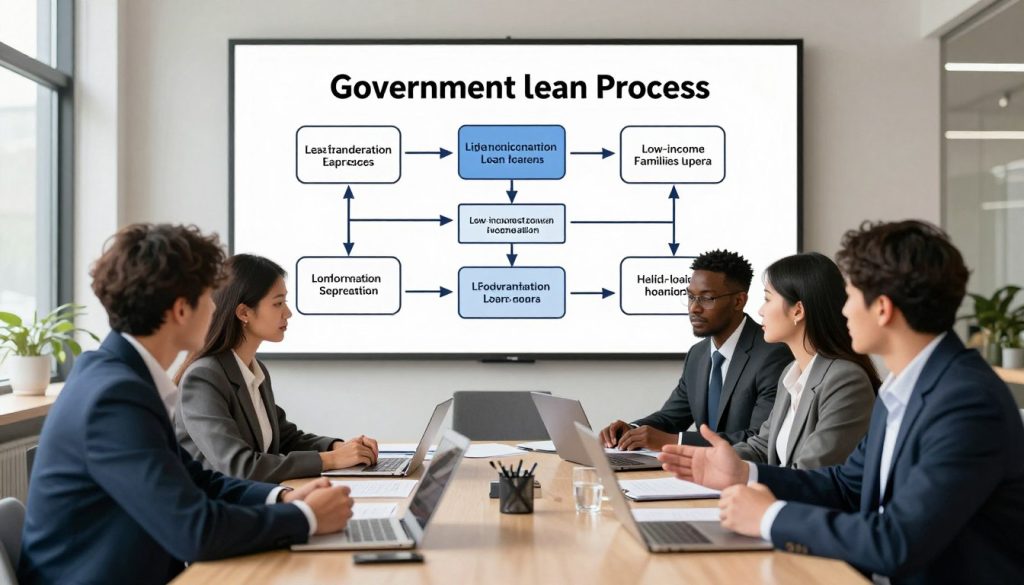
Navigating government loans for low-income families can be complex, but understanding the application process can simplify it. To successfully apply, it’s crucial to be well-prepared with the necessary documentation and knowledge of where to apply.
Required Documentation and Paperwork
Before starting the application, gather all required documents. These typically include:
- Proof of income: Pay stubs, tax returns, or a letter from your employer.
- Identification: Driver’s license, state ID, or passport.
- Proof of residency: Utility bills, lease agreement, or mortgage statement.
- Bank statements: Recent statements showing your financial status.
Having these documents ready will streamline the application process.
Where to Apply for Different Programs
Different government loan programs have specific application channels. For instance:
- FHA Loans: Apply through an approved FHA lender or mortgage broker.
- USDA Loans: Apply through a USDA-approved lender or directly on the USDA website.
- Section 8 Housing: Apply through your local Public Housing Agency (PHA).
Timeline and What to Expect After Applying
After submitting your application, the processing time can vary depending on the program. Typically, you can expect:
- Initial Review: 1-2 weeks for initial processing.
- Approval: 2-6 weeks for final approval.
- Disbursement: 1-4 weeks after approval for the funds to be disbursed.
Common Application Mistakes to Avoid
To ensure a smooth application process, avoid common mistakes such as:
- Incomplete applications: Ensure all sections are filled out.
- Inaccurate information: Double-check all details for accuracy.
- Missing documentation: Attach all required documents.
By being aware of these potential pitfalls, you can improve your chances of a successful application.
Conclusion
Government loans and assistance programs are designed to support low-income families in achieving stability and improving their quality of life. These programs offer a range of benefits, from housing assistance to education and career development support.
By understanding the various options available, low-income families can access the help they need to overcome financial challenges. Whether it’s through housing assistance programs, education loans, or emergency financial aid, government assistance is a vital resource for those in need.
Low-income families can explore these government assistance programs to find the support that best suits their needs. With the right resources and guidance, they can work towards a more secure financial future.