
Are you a first-time homebuyer in the US, wondering how to make your dream of owning a home a reality? Affordable home financing options are available through various government-backed loan programs.
These programs are designed to make homeownership more accessible by offering favorable terms and lower down payment requirements. Government loans can be a great option for those who may not have the perfect credit score or sufficient savings for a large down payment.
With several government-backed loan options available, it’s essential to explore and understand the benefits of each program to determine the best fit for your needs.
Key Takeaways
Table of Contents
- Government-backed loans offer favorable terms for first-time homebuyers.
- Lower down payment requirements make homeownership more accessible.
- Various loan programs are available to suit different needs.
- Understanding the benefits of each program is crucial.
- Exploring options can help determine the best fit for your situation.
Understanding Government Loans for First-Time Homebuyers
For many first-time homebuyers, government loans provide a more accessible and affordable path to owning a home. These loans are backed by the government, which reduces the risk for lenders and allows for more favorable terms for borrowers.
What Makes Government Loans Different from Conventional Loans
Government loans differ from conventional loans in several key ways, including lower down payment requirements and more lenient credit score thresholds. Government assistance for homebuyers is a critical aspect of these loans, making homeownership more achievable.
Why First-Time Buyers Should Consider Government Loan Programs
First-time buyers should consider government loan programs because they offer low interest rates for first-time buyers, making monthly mortgage payments more manageable.
| Loan Type | Down Payment Requirement | Credit Score Threshold |
|---|---|---|
| FHA Loans | As low as 3.5% | 580+ |
| VA Loans | 0% | 580+ |
| USDA Loans | 0% | 640+ |
Overview of the Home Buying Process with Government Financing
The home buying process with government financing involves pre-approval, house hunting, and loan processing.
Understanding the steps involved can help first-time buyers navigate the process more smoothly.
FHA Loans: The Most Popular Option for First-Time Buyers
Among the various government-backed loan options, FHA loans stand out as a preferred choice for first-time buyers. These loans are insured by the Federal Housing Administration and offer several benefits that make homeownership more accessible.
Key Features and Benefits of FHA Loans
FHA loans are known for their lenient credit score requirements and lower down payment options. They are particularly beneficial for buyers who may not have a perfect credit history or a significant down payment saved.
FHA Loan Requirements and Eligibility Criteria
To qualify for an FHA loan, applicants must meet certain eligibility criteria, including a minimum credit score and income verification. The specific requirements can vary depending on the lender and the borrower’s financial situation.

Down Payment and Mortgage Insurance Requirements
One of the key advantages of FHA loans is the low down payment requirement, which can be as low as 3.5% of the purchase price. However, borrowers are required to pay mortgage insurance premiums (MIPs) to protect the lender in case of default.
Loan Limits and Property Standards
FHA loans have specific loan limits that vary by location and property type. Additionally, the property must meet certain standards to ensure it is safe and habitable for the buyer.
| Loan Feature | Description | Benefit |
|---|---|---|
| Credit Score Requirements | Lenient credit score requirements | Easier qualification for buyers with less-than-perfect credit |
| Down Payment | As low as 3.5% of the purchase price | Lower upfront costs for buyers |
| Mortgage Insurance | Required for the life of the loan in most cases | Protects the lender; allows for lower down payments |
VA Loans: Exclusive Benefits for Veterans and Service Members
For those who have served in the military, VA loans provide an attractive pathway to homeownership with significant benefits. These government-backed loans are designed to make home financing more accessible and affordable for eligible veterans, service members, and their families.
Eligibility Requirements
To qualify for a VA loan, applicants must meet specific service requirements, which vary depending on the nature of their service, such as wartime or peacetime. Eligible individuals include veterans, active-duty service members, and certain surviving spouses. The VA assigns a Certificate of Eligibility to those who qualify, which is a crucial document in the home buying process.
Advantages of Zero Down Payment Options
One of the most significant advantages of VA loans is the zero down payment option, allowing eligible buyers to finance up to 100% of the home’s purchase price. This benefit can be a game-changer for those who may not have the funds for a down payment. It’s a unique feature that distinguishes VA loans from many other mortgage options.
VA Funding Fee and Other Costs
While VA loans offer zero down payment options, they are not entirely cost-free. Borrowers are required to pay a VA funding fee, which helps offset the costs of the VA loan program. The funding fee varies based on the type of service, down payment amount, and whether the borrower is a first-time or subsequent user of the VA loan benefit. Other costs associated with VA loans include appraisal fees, credit report fees, and title insurance.
Property Requirements and Limitations
VA loans come with specific property requirements to ensure the home is safe, sanitary, and sound. The property must be the borrower’s primary residence, and it can be a single-family home, townhouse, or condominium that meets VA’s minimum property requirements. There are also loan limits for VA loans, although the VA guarantees a portion of the loan rather than setting a maximum loan amount.
VA loans are a valuable resource for those who have served in the military, offering favorable terms and significant benefits. By understanding the eligibility requirements, advantages, and associated costs, veterans and service members can make informed decisions about their home financing options.
USDA Rural Development Loans: Affordable Options for Rural Areas
USDA Rural Development Loans provide a unique opportunity for homebuyers to secure affordable financing in rural areas. These loans are designed to promote rural housing by offering favorable terms that make homeownership more accessible.
Geographic Eligibility
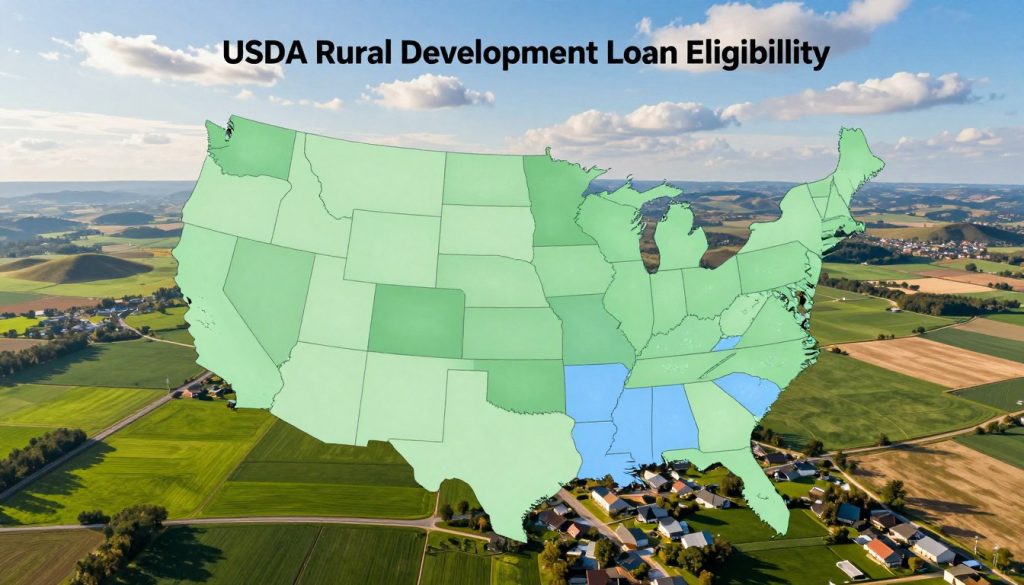
To qualify for a USDA Rural Development Loan, the property must be located in a rural area as defined by the USDA. Eligible areas typically include suburbs and smaller towns outside of major metropolitan areas. Homebuyers can check the USDA’s website to determine if a specific property is located within an eligible area.
Income Limits and Requirements
USDA loans have income limits that vary by location and are based on the area’s median income. Applicants must meet these income requirements to be eligible. The income limits are in place to ensure that the loan benefits those who need it most.
Benefits of 100% Financing
One of the most significant advantages of USDA Rural Development Loans is the option for 100% financing, which means no down payment is required. This feature makes it easier for homebuyers to purchase a home without having to save for a down payment.
Property Eligibility Standards
The property being purchased must meet certain eligibility standards, including being used as the borrower’s primary residence. Properties can include single-family homes, condominiums, and new constructions. The USDA has specific guidelines regarding the condition and quality of the property.
Best Government Loans for First-Time Buyers Based on Your Situation
The best government loan for a first-time buyer depends on various factors, including down payment savings and credit score. Understanding these factors can help you choose the most suitable loan program.
For Buyers with Limited Down Payment Savings
For those struggling to save for a down payment, FHA Loans are a viable option, requiring as little as 3.5% down. Additionally, VA Loans offer zero down payment options for eligible veterans and service members.
For Buyers with Lower Credit Scores
Buyers with lower credit scores may find FHA Loans more accessible due to their lenient credit score requirements. Some FHA loans are available to borrowers with credit scores as low as 580.
For Buyers in High-Cost Areas
In high-cost areas, FHA Loan Limits can be higher, making it easier for buyers to purchase more expensive homes. It’s essential to check the current loan limits in your area.
For Buyers with Unique Circumstances
Self-employed individuals and recent graduates may benefit from USDA Loans if they are purchasing in rural areas. These loans offer favorable terms, including 100% financing.
| Loan Type | Down Payment | Credit Score |
|---|---|---|
| FHA Loan | 3.5% | 580+ |
| VA Loan | 0% | 580+ |
| USDA Loan | 0% | 640+ |
By understanding your financial situation and exploring the various government loan options, you can find the best loan for your needs.
Down Payment Assistance Programs to Complement Government Loans
Government assistance for homebuyers is not limited to loan options; down payment assistance programs can also provide substantial support. These programs can be used in conjunction with government-backed loans to make homeownership even more accessible.
Federal Down Payment Assistance Options
The federal government offers several down payment assistance programs that can be used alongside government loans. For instance, the HOME Investment Partnerships Program provides funding to states and localities to create affordable housing opportunities.
State and Local Programs Worth Exploring
In addition to federal programs, many states and local governments offer their own down payment assistance initiatives. These can vary significantly, so it’s essential for homebuyers to research what’s available in their area.
| Program | Eligibility | Benefits |
|---|---|---|
| HOME Investment Partnerships Program | Low-to-moderate income homebuyers | Down payment assistance, affordable housing |
| State Housing Finance Agency Programs | Varies by state and program | Down payment assistance, competitive interest rates |
How to Stack Multiple Assistance Programs
Homebuyers may be able to combine multiple down payment assistance programs to maximize their benefits. However, this requires careful planning and understanding of the program rules.
Good Neighbor Next Door and Other Special Programs
Certain professions, like law enforcement officers and teachers, may be eligible for special programs like the Good Neighbor Next Door initiative, which offers significant discounts on HUD-owned homes.

Step-by-Step Guide to Applying for Government Home Loans
Applying for a government home loan can be a daunting task, but breaking it down into manageable steps can make the process much smoother. First-time homebuyers can benefit greatly from understanding the intricacies of government-backed loans, including FHA, VA, and USDA loans, which offer more lenient credit scoring and lower down payment requirements compared to conventional loans.
Getting Pre-Approved for Your Loan
The first step in applying for a government home loan is getting pre-approved. This involves contacting an approved lender and providing financial information to determine how much you can borrow. Pre-approval gives you a clear understanding of your budget and makes you a more attractive buyer to sellers.
Gathering Required Documentation
To move forward with your loan application, you’ll need to gather various documents, including pay stubs, bank statements, and tax returns. Having these documents ready can expedite the application process and help avoid delays.
Working with Approved Lenders
It’s crucial to work with lenders who are approved by the relevant government agency for your loan type. These lenders are well-versed in the specific requirements and can guide you through the application process, ensuring that you’re taking advantage of the best first-time home buyer programs available.
Navigating the Appraisal and Inspection Process
Once your loan is approved, the next steps involve an appraisal of the property to ensure its value and an inspection to identify any potential issues. Understanding these processes can help you navigate any challenges that arise and ensure a smooth transaction.
Understanding Closing Costs and Final Steps
Finally, it’s essential to understand the closing costs associated with your government home loan. These costs can include fees for appraisal, inspection, and loan origination. Being prepared for these expenses can help you complete the home buying process without unexpected surprises, making the most of government housing initiatives designed to support homebuyers.
Conclusion: Making the Most of Government Loan Opportunities
Government loan programs offer a lifeline to first-time homebuyers in the US, providing more accessible and affordable pathways to homeownership. By understanding the benefits of FHA loans for first time buyers and the exclusive advantages of VA loans for new home purchasers, individuals can make informed decisions about their home financing options.
Whether you’re a veteran, a rural homebuyer, or simply a first-time buyer, there’s a government loan program tailored to your needs. By exploring these options and seeking professional advice, you can unlock the door to your dream home. With the right guidance, you can navigate the application process and take advantage of the benefits that government loan programs have to offer.
Take the next step towards homeownership by researching and consulting with approved lenders to determine the best government loan program for your situation. With the right support, you can achieve your goal of owning a home in the US.